


When your attic keeps collecting heat all afternoon, the rest of your house has to work harder to stay comfortable. Radiant barrier gives New Braunfels homeowners a way to reduce that heat at the roofline before it spreads throughout the attic.
That can make a noticeable difference during a New Braunfels, TX summer. Homes near Gruene, Mission Hills Ranch, and other parts of the New Braunfels area can spend hours under direct sun, leaving the attic holding heat even after outdoor temperatures begin to drop.
Radiant barrier and attic insulation handle different parts of the problem. Traditional insulation provides resistance to conductive heat flow. Radiant barrier reflects radiant energy before as much of it reaches the insulation and space below. Using both can create a more complete attic solution.
Green Energy of San Antonio can evaluate your attic, existing insulation, and roof exposure before recommending a project. Attic ventilation can also be included when needed, but only as an add-on to radiant barrier or attic insulation work.
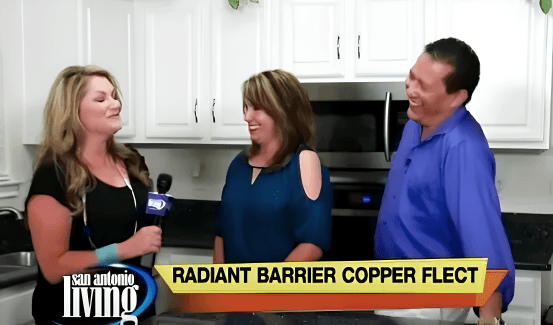

Green Energy Radiant Barrier™ is backed by a 25-year warranty.

%20(1)%20(2).gif)
Radiant barrier is a reflective material positioned inside the attic, usually beneath the roof deck or along the rafters. Instead of soaking up heat, the surface sends radiant energy back toward the roof so less of it reaches the attic space below.
That is not the same way conventional insulation works. Fiberglass and other traditional insulation materials slow conductive heat movement and provide R-value. Radiant barriers primarily reduce radiant heat transfer coming from the hot roof above.
For Braunfels homeowners, that distinction becomes especially important during summer. A roof exposed to Texas heat can continue radiating energy toward the attic for hours, making rooms below the attic harder to cool while the AC keeps running.
When the reflective surface is installed correctly with an adjacent air space, a radiant barrier can block up to 95% of radiant heat transfer. Depending on the house, peak summer attic temperatures may also fall by 15 to 30 degrees or more.
Learn more about how radiant barriers work.
Radiant barrier changes what happens to heat after the sun warms your roof. Rather than letting that radiant energy continue moving into the attic, the reflective surface redirects much of it away.
Without radiant barrier, the roof deck becomes a major source of attic heat throughout the day. That energy radiates downward toward the insulation, attic floor, and rooms below, adding to the cooling load inside the house.
Attic insulation still matters because it slows conductive heat flow. Radiant barrier works one step earlier by reducing the infrared energy reaching that insulation in the first place. Air sealing can also help optimize the result by limiting unwanted air movement through the attic.
The barrier must face open air to work correctly. Proper positioning, coverage, and air space are all important parts of professional radiant barrier installation.
For more information, read How a Radiant Barrier Keeps Texas Homes Cool.

%20(1).png)
Long New Braunfels summers can put a lot of heat above your living space. Radiant barrier helps protect the attic from that constant radiant load, which can make rooms below the roof easier to keep comfortable.
Less attic heat also means less heat for your air conditioner to fight. If your AC seems to be running through the hottest part of every afternoon, reducing heat gain at the roof can help lower the cooling demand placed on the system.
Radiant barrier can also support year-round home comfort when it is paired with the right level of attic insulation.
%20(1).png)
Green Energy Radiant Barrier uses reflective aluminum designed for the high temperatures found inside Texas attics. The material is made to keep performing without functioning like insulation that absorbs and holds heat.
%20(1).png)
You do not have to choose between radiant barrier and attic insulation. They solve separate heat-transfer problems and can work together inside the same attic.
If the insulation in your New Braunfels home has settled, is too shallow, or has uneven coverage, additional blown-in insulation may be recommended along with radiant barrier.
Green Energy of San Antonio can review both before setting the project scope. Green Energy of San Antonio does not install spray foam or other foam insulation, and insulation removal is not offered as a standalone service.
If your attic already contains spray foam, the existing conditions can still be reviewed to determine whether one of Green Energy's available solutions is appropriate.
Learn more about insulation options for San Antonio homes.

New Braunfels summers regularly bring intense heat and long periods of direct sun. That can leave the roof and attic holding heat well into the afternoon, increasing the cooling demand on the rest of the house.
The area also continues to grow, with homes in and around communities such as Veramendi, Vintage Oaks, Mission Hills Ranch, and Gruene representing a mix of construction styles and attic conditions. A newer house can still experience significant radiant heat even when it already has adequate traditional insulation.
Two-story homes can be especially frustrating when upstairs bedrooms stay warmer than the first floor. Reducing radiant heat at the roofline can help address one of the factors contributing to those temperature differences.

Lowering your home's energy demand before adding solar can help you get more value from the system you eventually install. A radiant barrier reduces one source of cooling demand by reflecting heat away from the attic rather than allowing it to build up above your home. For New Braunfels homeowners planning a solar project, improving attic performance first may help optimize the house before determining the size and price of a solar system. Learn more about how you can make your home more energy efficient before solar panel installation with radiant barriers here.

Financing is available for qualifying radiant barrier and window projects, including 0% interest for 2 years. New Braunfels homeowners can ask about current financing terms when requesting a free estimate and scheduling their project.



We are very pleased with the radiant barrier we had Green Energy install in our attic. We have definitely noticed a difference in the closets that the attics are connected too. We had an issue with the upstairs AC unit after install and Green Energy responded immediately even though it was after 8pm. The issue was resolved quickly and efficiently. Personal and responsive, professional service. The value will continue to tally up as the years go by. Thank you to the Green Energy team!

We had a mid-grade radiant barrier installed and also had some insulation blown in over our garage, which has never had any the entire time that we have lived in this house. They did an excellent job and I can definitely notice a difference in how much less hot it gets in our garage now. It’s still pretty toasty but not hot enough to bake a cake out there anymore!! We are VERY satisfied with the work that we had done, and would definitely recommend Green Energy to anyone!!! 😁 👍

Radiant Barrier. After getting quotes for this service we found Green Energy at the Home and Garden show one year. We decided to go with them for the radiant barrier because of their quality product, professionalism and commitment to great work! Thank you Green Energy!

Mr. Ramos and his grandson came out to talk to us about a radiant barrier and were very professional and courteous. Really appreciated them giving us options that were in our best interest and not theirs. Needless to say, we were very satisfied with the installation and the product. It’s been three months and we haBe already saved over $200!! I would definitely recommended homeowners to give Mr. Ramos a call if your looking into radiant barriers for your home.
.webp)
Six years ago Green Energy installed my radiant barrier, blown-in insulation, and a couple solar powered attic exhaust fans. They did a terrific job and I am still super happy with the outcome. I combined all of this work with replacing my single pane windows with double pane. Immediately my monthly average electric bill dropped from about $425 to about $220 and has remained in that range ever since!
Last week I called them regarding a warranty question. The phone was answered immediately and I received nothing short of superior support. I cannot express exactly how happy I am with Green Energy, even six years after installation!
.webp)
I had Green Energy of San Antonio come in and install Radiant Barrier, Soffit vents, and install a ridge vent on my house. They did an excellent job! My house was instantly cooler, and my HVAC system actually turned off. It usually runs non stop during the day because of the temperature outside. Thank you so much for everything!
.webp)
Green Energy of San Antonio serves New Braunfels, TX with professional radiant barrier installation designed for homes dealing with heavy attic heat, uncomfortable rooms, and high summer cooling demand.
Attic conditions can vary considerably across the Braunfels area. Older homes may have settled or uneven insulation, while newer construction may have plenty of insulation but still experience radiant heat coming through the roof. Homes around Gruene, Mission Hills Ranch, and other New Braunfels neighborhoods should be evaluated based on the actual attic rather than age alone.
During the estimate, the team can look at insulation levels, available air space, roof exposure, and where the house feels hottest. The result may be a radiant barrier project, additional attic insulation, or a combination of both.
Attic ventilation may also be added to radiant barrier or attic insulation work when the attic needs improved airflow. It is not available as a standalone service. Green Energy of San Antonio also provides replacement windows for New Braunfels homes where older windows are contributing to comfort problems
.We serve New Braunfels and surrounding communities, including:
The exact scope, schedule, and any permit considerations can depend on the type of construction work involved. Green Energy of San Antonio can walk you through the next step before the job begins.
For New Braunfels homeowners dealing with hot rooms, high summer cooling costs, or an AC that seems to run constantly, radiant barrier can be a worthwhile home efficiency upgrade.
Radiant barrier reduces the amount of radiant heat entering the attic from the roof. When paired with adequate attic insulation, that can make the house easier to keep comfortable during long New Braunfels summers and reduce some of the cooling demand placed on the AC.
Heating and cooling are also among the largest sources of energy use in a typical home, so improvements that reduce unwanted heat gain can have an impact on overall energy consumption.
Actual results depend on roof exposure, attic design, insulation levels, HVAC performance, and household energy use.
Related resource: Does Radiant Barrier Really Work for Cutting Energy Costs?
There is no single savings amount that applies to every radiant barrier New Braunfels project.
The result depends on the size of the house, roof exposure, existing attic insulation, AC efficiency, thermostat settings, and how much radiant heat is currently entering the attic.
Radiant barrier can help cut cooling demand by giving the AC less heat to fight, but the impact on your utility bill will vary from one home to another.
A free estimate gives Green Energy of San Antonio a chance to inspect the attic and determine whether radiant barrier makes sense for your home before you start the project.
Learn more about radiant barrier installation cost in San Antonio.
Radiant barriers can lower peak summer attic temperatures by 15 to 30 degrees or more depending on the attic, roof exposure, existing insulation, ventilation, and outdoor conditions.
Under the right conditions, some radiant barrier installations may produce even larger reductions in attic heat.
The goal is not to guarantee one exact temperature change inside the house. It is to reduce the amount of heat building up above your living space so your cooling system has less work to do during a New Braunfels, TX summer.
Yes. Radiant barrier is best known for helping with summer heat, but it can also support more stable indoor temperatures throughout the year.
Traditional attic insulation remains especially important because it resists conductive heat flow between the attic and living space. Radiant barrier and conventional insulation perform different jobs, which is why the two can work well together.
Radiant barrier does not have an R-value on its own.
R-value measures how well traditional insulation resists conductive heat flow. Radiant barriers work differently because they reflect radiant heat rather than slowing heat transfer in the same way fiberglass insulation does.
That is why radiant barrier complements attic insulation rather than replacing it. One addresses radiant heat while the other provides resistance to conductive heat flow.
Yes. Radiant barriers are specifically designed to reflect radiant heat rather than absorb it.
When installed correctly, a radiant barrier can block up to 95% of radiant heat transfer. They are particularly useful in hot climates such as New Braunfels, where roofs are exposed to intense sun for long periods during summer.
Proper installation is crucial. The reflective material must face an adjacent air space to function as intended.
Related resource: Radiant Barrier Myths Debunked
Not exactly. Reflective insulation existed before NASA, but NASA significantly advanced radiant barrier technology for use in spacecraft and astronaut protection.
Those advancements helped shape the highly reflective materials used today to manage radiant energy. In a New Braunfels attic, the same basic principle applies: the reflective surface helps reduce radiant heat transfer from the hot roof toward the insulation and living space below.
New Braunfels homes face long, hot, and humid summers, which can put a lot of demand on the attic and cooling system.
Adequate attic insulation helps slow conductive heat flow between the attic and the rooms below. Radiant barrier handles a different part of the problem by reflecting radiant energy coming from the roof.
For many Braunfels homes, the strongest attic solution is not choosing one or the other. It is making sure the house has enough traditional insulation while also addressing radiant heat where necessary.
Green Energy of San Antonio offers blown-in attic insulation and radiant barrier. The company does not install spray foam or other foam insulation and does not offer insulation removal as a standalone service.
Radiant heat is energy that travels from a warmer surface toward cooler surfaces around it.
In your attic, sunlight heats the roof throughout the day. The hot roof deck then radiates infrared energy downward toward the attic, insulation, and living space below.
Radiant barrier helps interrupt that process by reflecting much of that energy back toward the roof.
Radiant barriers do not create cold air. Instead, they reduce one of the sources of heat that your AC has to overcome.
As the sun heats the roof, radiant energy moves through the roof deck toward the attic. A properly positioned radiant barrier reflects much of that energy before it reaches the insulation below.
With less radiant heat entering the attic, the house can be easier to keep comfortable and the AC may not need to run as often during the hottest part of the day.
Read more: How Do Green Energy Radiant Barriers Work?
Radiant barrier is not generally expected to damage shingles when it is installed correctly.
The system needs the proper positioning and air space to perform as intended. A professional installation takes the roof and attic configuration into account rather than using the same approach for every house.
Green Energy of San Antonio recommends professional radiant barrier installation rather than a DIY project.
Performance depends on proper placement, coverage, attachment, and air space. Even relatively small installation errors can reduce how effectively the radiant barrier reflects heat.
Working inside an attic during a New Braunfels summer can also be difficult and unsafe without the right equipment and experience.
Learn more about how to install radiant barrier in your attic the right way.
Possibly. Existing insulation does not automatically mean the attic is protected from radiant heat.
Traditional fiberglass insulation, spray foam, and other foam insulation products are designed differently from radiant barrier. Conventional insulation primarily resists heat flow, while radiant barrier reflects radiant energy coming from the roof.
If your existing attic insulation is in good condition but the attic still gets extremely hot, radiant barrier may provide another layer of protection. If the insulation is low or uneven, Green Energy of San Antonio may recommend adding blown-in attic insulation as part of the project.
Green Energy of San Antonio does not install spray foam or foam insulation and does not provide standalone insulation removal.
Radiant barrier should not interfere with common wireless signals such as WiFi, Bluetooth, LTE, or normal cell phone service inside the home.
Although the material contains a reflective layer, a properly installed attic radiant barrier is not the same as enclosing the entire house in a solid metal barrier.
Related resource: Do Radiant Barriers Affect Cell Phone Service?
Green Energy of San Antonio installs radiant barrier for New Braunfels homeowners looking for a practical way to reduce the amount of summer heat building up above their living space.
Your existing attic insulation can stay in place when appropriate while radiant barrier adds protection against a different form of heat transfer. If the insulation itself needs improvement, blown-in attic insulation can be included in the project as well.
If your attic keeps holding Texas heat, certain rooms never seem to cool down, or the AC is running longer than you would like, request a free estimate for radiant barrier in New Braunfels, TX.

“Enjoy cooler summers and warmer winters. That’s the GESA promise.”


