


Do you need new insulation in your San Antonio attic? Many homeowners first notice attic insulation problems when utility bills start climbing, certain rooms feel hotter than others, or the AC runs longer than it should.
Green Energy of San Antonio helps homeowners improve attic performance with insulation solutions designed for the South Texas climate. Our team can inspect your current insulation levels, attic ventilation, and roofline heat exposure to recommend the right setup for your home.
In many San Antonio homes, the best solution is not choosing between radiant barrier and blown-in insulation. It is making sure each part of the attic system is doing its job.

Our expert team can check your attic for free to review current insulation levels and help determine how much insulation your home may need. We also evaluate attic ventilation, because proper airflow can help reduce moisture buildup, support roof performance, and improve overall attic efficiency.
We proudly serve San Antonio and nearby communities across Bexar County and the surrounding areas.

Radiant barrier and blown-in insulation are both used in attics, but they do not work the same way.
Radiant barrier insulation is installed beneath the roofline to reflect radiant heat before it builds up in the attic. This is especially useful in hot, sunny climates like San Antonio, where roof surfaces absorb intense heat throughout the day.
Radiant barrier can help:
For a deeper explanation, read our guide on how radiant barriers work.
%201%20(1).webp)
Offer valid for projects of 1,300 sq ft or more. Offers may not be combined.
Start with a FREE Estimate%20(1).webp)
Offer valid for projects of 1,000 sq ft or more. Offers may not be combined.
Start with a FREE EstimateBlown-in insulation is loose-fill insulation, commonly made from fiberglass or cellulose, that is installed across the attic floor. Its main job is to increase R-value and slow conductive heat transfer between the attic and the living space.
Blown-in insulation can help:
Learn more about different types of insulation and their benefits.
Radiant barrier is not a replacement for adequate R-value insulation. Blown-in insulation is still important, especially in older homes or attics with low, settled, or missing insulation.
The strongest attic performance often comes from combining both products. Radiant barrier helps reflect radiant heat away from the attic, while blown-in insulation helps slow heat transfer into the living space.
Not sure what your attic needs? Green Energy of San Antonio can inspect your attic and recommend the right solution based on your current insulation levels, ventilation, roof exposure, and comfort concerns.

Radiant barrier insulation is designed to reduce radiant heat transfer from the roofline into the attic. It is typically installed under the roof deck or along the attic rafters, where it can reflect radiant energy before that heat spreads through the attic.
In San Antonio, this matters because attic temperatures can rise quickly during long stretches of direct sun. When that heat builds up above your living space, your AC may have to work harder to keep the home comfortable.
Radiant barrier helps address this problem by reducing radiant heat gain at the roofline. When paired with proper blown-in insulation, it can help improve temperature balance, reduce hot rooms, and support better cooling efficiency.For more information, visit our main radiant barrier insulation page.
Blown-in insulation helps slow heat transfer after heat has entered the attic. Radiant barrier helps reduce how much radiant heat enters the attic in the first place. For many San Antonio homes, especially older homes with lower insulation levels, the best approach is to evaluate both.
That is why Green Energy of San Antonio does not take a one-size-fits-all approach. We inspect your attic, review current insulation levels, check ventilation, and recommend what is appropriate for your home.
You can also read more about insulation options for San Antonio homes.
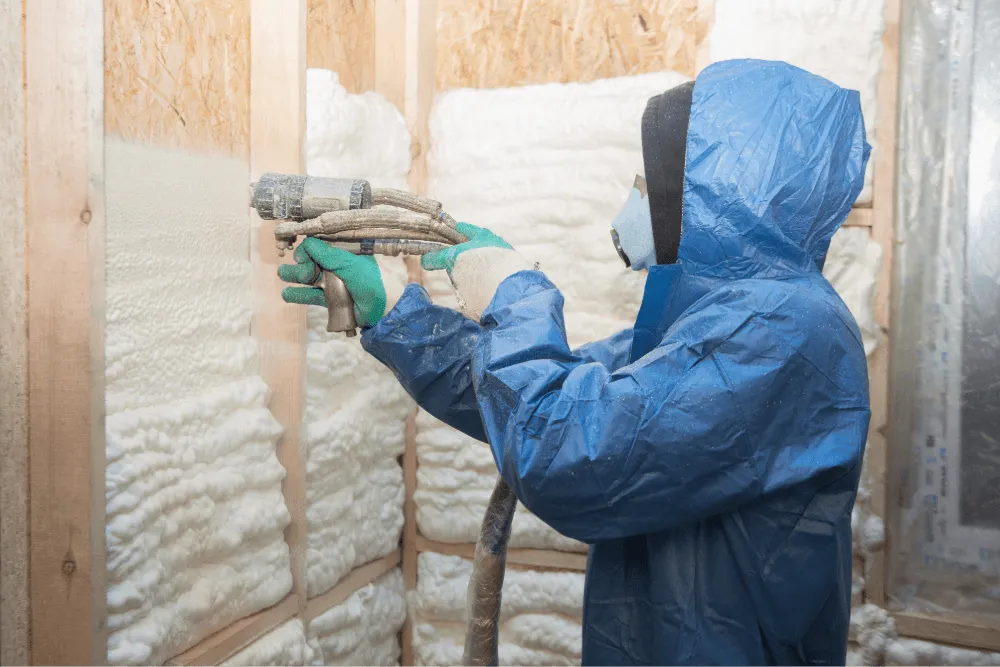
Green Energy of San Antonio does not offer spray polyurethane foam insulation. While spray foam can be effective in certain applications, it may come with concerns related to installation quality, ventilation, fire safety, off-gassing, and long-term attic performance.
Our team focuses on attic insulation solutions that support home comfort, energy efficiency, and safer installation practices. Depending on your home, this may include blown-in fiberglass insulation, radiant barrier insulation, attic ventilation improvements, or a combination of attic upgrades.
Learn more about the dangers of spray foam insulation.


What Is Insulation R-Value?R-value measures how well insulation resists conductive heat flow. The higher the R-value, the better the material slows heat transfer.
Blown-in insulation is measured by R-value because it is designed to slow conductive heat movement between your attic and living space. Most homes in the San Antonio area need sufficient attic insulation to help maintain comfort during both hot summers and cooler winter months.
If your attic has too little insulation, settled insulation, or uneven coverage, your home may lose energy more easily. This can lead to higher utility bills, uneven temperatures, and longer HVAC run times.
Green Energy of San Antonio can inspect your current insulation levels and determine whether additional blown-in insulation may be needed.
Helpful resource: Signs Your Home Is Under-Insulated
Radiant barrier insulation does not have an R-value on its own because it does not work like traditional insulation.
R-value measures resistance to conductive heat flow. Radiant barriers work by reflecting radiant heat instead of absorbing or slowing heat in the same way blown-in insulation does.
That does not make radiant barrier better or worse than blown-in insulation. It means the two products do different jobs.
For many San Antonio homes, radiant barrier works best when installed with proper attic insulation. Blown-in insulation helps with R-value, while radiant barrier helps reduce radiant heat gain from the roofline.
You can learn more about this on our page explaining how radiant barriers make your home more energy efficient.
R-value is determined by installing the number of bags per 1000 square feet to the desired height in inches when the insulation is settled and at the desired weight, determining the density. Green Energy of SA installs R-30 fiberglass blown insulation, which is 10.25 inches tall throughout your attic, with a weight of no less than .436 pounds per square foot.
The maximum that one bag can cover for R-30 insulation is no more than 65.4 square feet. Insulation is not sold by the inches, it’s sold by the amount of bags it takes to fill your attic up to the specified (R-30) R-value. Basically, the higher the R-value, the better the insulation. The R-30 insulation we use, for example, is better than R-19 insulation.
If a San Antonio insulation installer covers your attic with less than the minimum number of bags it needs, your attic will have a lower insulation R-value, which means you won’t get the same energy savings during the hot Texas summers. At Green Energy of San Antonio, we guarantee a quality job, with R-30 insulation properly installed in your attic.
Check out detailed information on AttiCat insulation here.
Since R-value is used to describe how quickly a product will absorb heat, radiant barriers have no r-value of their own. That’s because radiant barriers do not absorb heat — they reflect heat before it has a chance to make its way into your home. Since there’s no R-value to radiant barrier insulation, does that mean it’s inferior? Quite the opposite, actually: a radiant barrier doesn’t need an R-value as it does not absorb the heat. While traditional insulation is measured on how much heat it can absorb, the radiant barrier does not absorb heat so R-value is unnecessary to measure. When it comes to radiant barriers, R-value is not brought into question since the material reflects heat before it makes its way into your attic, as opposed to traditional insulation which traps heat within your attic.
At Green Energy of San Antonio, we provide attic insulation services for homeowners throughout San Antonio and the surrounding areas. From older homes with low insulation levels to newer homes that still struggle with attic heat, our team can recommend insulation solutions based on your home’s structure, attic condition, and comfort concerns.
Our attic insulation services may include:
Blown-in insulation
Radiant barrier insulation
Attic insulation inspections
Attic ventilation recommendations
Existing insulation review
Energy-efficiency recommendations
We serve homeowners across San Antonio, Bexar County, and nearby communities, including:
Blown-in insulation is loose-fill insulation that is installed across the attic floor using a specialized blower. It is commonly made from fiberglass or cellulose and is used to increase attic R-value.
Its main job is to slow conductive heat transfer between the attic and the living space. This can help improve comfort, reduce energy waste, and support more consistent indoor temperatures.
Adding attic insulation may help reduce energy waste and lower heating and cooling costs, especially if your attic is under-insulated or has uneven coverage.
Actual savings depend on your home’s size, current insulation levels, attic ventilation, HVAC system, energy use, and sun exposure. Green Energy of San Antonio can inspect your attic and let you know whether additional insulation may help.
Related resource: Understanding Attic Insulation Cost Before You Upgrade
Proper attic insulation can help improve energy efficiency, reduce heat transfer, support more consistent indoor temperatures, and make your home more comfortable year-round.
In San Antonio, attic insulation is especially important because extreme summer heat can place heavy strain on your cooling system.
Read more: Benefits of Insulating Your Attic
Not exactly. Radiant barrier and blown-in insulation do different jobs.
Blown-in insulation increases R-value and slows conductive heat transfer. Radiant barrier reflects radiant heat before it builds up in the attic. In many San Antonio homes, the best performance comes from using both together.
No. Radiant barrier is not a replacement for adequate attic insulation.
A radiant barrier helps reduce radiant heat gain from the roofline, while blown-in insulation helps slow heat transfer through the ceiling. If your attic does not have enough R-value, you may still need blown-in insulation even if you install a radiant barrier.
You may still benefit from radiant barrier if your attic gets extremely hot, your AC runs constantly, or certain rooms are hard to cool.
Existing blown-in insulation helps slow conductive heat transfer, but it does not reflect radiant heat from the roofline. A radiant barrier can add another layer of protection by reducing radiant heat gain before it spreads through the attic.
Not always. Existing attic insulation may be left in place if it is dry, clean, evenly distributed, and still performing properly.
Removal may be recommended if the insulation is damaged, contaminated by pests, affected by moisture, compacted, or uneven. Green Energy of San Antonio can inspect your attic and let you know whether removal, additional blown-in insulation, radiant barrier, or another solution is appropriate.
Related resource: When Is It Time for Attic Insulation Removal?
Green Energy of San Antonio installs radiant barrier insulation and blown-in insulation for homeowners in San Antonio and surrounding areas.
Both can be excellent options depending on your attic. Blown-in insulation helps improve R-value, while radiant barrier helps reduce radiant heat gain. Our team can inspect your attic and recommend the right combination for your home
Green Energy of San Antonio uses AttiCat expanding blown-in fiberglass insulation, which does not absorb moisture and does not support mold growth the way some moisture-holding materials can.
However, moisture problems in the attic should always be addressed. Proper ventilation and attic conditions are important for long-term insulation performance.
Learn more about attic ventilation.
Attic insulation helps reduce heat transfer between your attic and living space. This can improve energy efficiency, reduce hot and cold spots, lower HVAC strain, and make your home more comfortable throughout the year.
For many San Antonio homes, the best attic insulation strategy includes proper R-value, radiant heat control, and ventilation working together.
Read more about attic insulation solutions for a more comfortable home.

“Enjoy cooler summers and warmer winters. That’s the GESA promise.”


