


For Cibolo homeowners, a properly planned project can help reduce one of the biggest sources of summer heat entering from above. The reflective material is installed below the roof, within the attic, where it sends radiant energy back toward the roof instead of allowing as much of it to build inside the house.
That matters in Cibolo, TX, where long stretches of Texas sun can make upper rooms harder to cool. Homes near Cibolo Creek, the FM 78 corridor, and newer neighborhoods can all have different roof exposure and insulation conditions that affect the home.
This system does not replace traditional insulation. Blown-in insulation creates a thermal blanket that slows conductive heat transfer, while the reflective layer addresses energy coming from the roof. The two can complement each other based on what the space needs.Green Energy of San Antonio can review existing coverage, explain any issues they find, and share the details of the recommended project before installation begins.
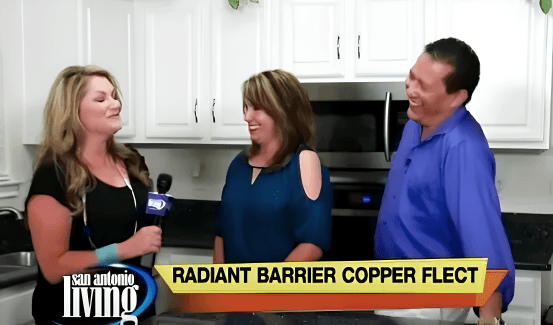

Green Energy Radiant Barrier™ is backed by a 25-year warranty.

%20(1)%20(2).gif)
A radiant barrier is usually made with a thin layer of reflective aluminum. It is installed facing an open-air space so the surface can reflect radiant energy instead of absorbing it.
Traditional insulation handles a different type of heat movement. If the existing thermal blanket is thin or uneven, blown-in insulation can be one of the fastest ways to restore coverage while the reflective system addresses heat from above.
When correctly installed, the material can block about 95% of radiant heat, with some products rated to reflect up to 97%. Based on roof exposure, ventilation, and insulation levels, peak temperatures in the space below the roof may drop by roughly 10°F to 30°F.
Learn more about how radiant barriers work.
Sunlight heats the roof throughout the day. Roofing materials then radiate energy toward the space below, where ductwork, insulation, and other surfaces can absorb that heat.
The reflective layer interrupts that process. Instead of storing as much roof heat, the system sends radiant energy back toward the roof.
An open-air gap is necessary for proper performance. Installation quality matters, and dust buildup on the reflective surface can reduce effectiveness over time.

%20(1).png)
A cooler space above the ceiling can make it easier to keep rooms comfortable during hot weather. It can also create a better environment around HVAC ductwork and equipment.
The Department of Energy identifies radiant barriers as most useful in hot climates. Homeowners in these climates may see cooling-cost reductions in the range of roughly 5% to 10%, although actual savings vary from one house to another.
%20(1).png)
Green Energy's radiant barrier uses reflective aluminum designed for demanding roof conditions. It does not act like traditional insulation that slows conductive heat. Its job is to reflect energy before surrounding materials absorb it.
%20(1).png)
This product is meant to complement the insulation already protecting the living space. Depending on the home's current insulation level, the added value of a reflective layer can vary, which is why every project should start with a review.
If coverage is weak, additional blown-in insulation may be recommended. Green Energy of San Antonio does not install spray foam, even though spray foam can provide a strong air seal in some construction assemblies.
The team can explain which option makes sense, share the project scope, and point out any issues before you decide how to move forward.
Learn more about insulation options for San Antonio homes.

Cibolo's hot, humid summers can keep roofs exposed to strong Texas sun for hours at a time. That heat can continue building above the living space even when the house already has traditional insulation.
Roof exposure can also vary considerably between established areas near Cibolo Creek and FM 78 and newer residential neighborhoods. Two-story layouts and rooms directly below the roof may feel the difference most during long summer afternoons.
A reflective system can help address that roof heat without replacing the insulation already doing its job below.

Improving efficiency before adding solar can help reduce the amount of electricity the house needs for cooling. By lowering roof heat, a reflective system can help the AC run under less demanding conditions and may improve the value of future energy upgrades. Learn more about how you can make your home more energy efficient before solar panel installation with radiant barriers here.

Financing options are available for radiant barrier and window projects, including 0% interest for 2 years, so upgrading your home's comfort and efficiency doesn't mean covering the full cost upfront.



We are very pleased with the radiant barrier we had Green Energy install in our attic. We have definitely noticed a difference in the closets that the attics are connected too. We had an issue with the upstairs AC unit after install and Green Energy responded immediately even though it was after 8pm. The issue was resolved quickly and efficiently. Personal and responsive, professional service. The value will continue to tally up as the years go by. Thank you to the Green Energy team!

We had a mid-grade radiant barrier installed and also had some insulation blown in over our garage, which has never had any the entire time that we have lived in this house. They did an excellent job and I can definitely notice a difference in how much less hot it gets in our garage now. It’s still pretty toasty but not hot enough to bake a cake out there anymore!! We are VERY satisfied with the work that we had done, and would definitely recommend Green Energy to anyone!!! 😁 👍

Radiant Barrier. After getting quotes for this service we found Green Energy at the Home and Garden show one year. We decided to go with them for the radiant barrier because of their quality product, professionalism and commitment to great work! Thank you Green Energy!

Mr. Ramos and his grandson came out to talk to us about a radiant barrier and were very professional and courteous. Really appreciated them giving us options that were in our best interest and not theirs. Needless to say, we were very satisfied with the installation and the product. It’s been three months and we haBe already saved over $200!! I would definitely recommended homeowners to give Mr. Ramos a call if your looking into radiant barriers for your home.
.webp)
Six years ago Green Energy installed my radiant barrier, blown-in insulation, and a couple solar powered attic exhaust fans. They did a terrific job and I am still super happy with the outcome. I combined all of this work with replacing my single pane windows with double pane. Immediately my monthly average electric bill dropped from about $425 to about $220 and has remained in that range ever since!
Last week I called them regarding a warranty question. The phone was answered immediately and I received nothing short of superior support. I cannot express exactly how happy I am with Green Energy, even six years after installation!
.webp)
I had Green Energy of San Antonio come in and install Radiant Barrier, Soffit vents, and install a ridge vent on my house. They did an excellent job! My house was instantly cooler, and my HVAC system actually turned off. It usually runs non stop during the day because of the temperature outside. Thank you so much for everything!
.webp)
Green Energy of San Antonio provides professional installation for Cibolo homeowners who want to protect their living space from excessive roof heat and improve summer comfort.
Every house is different. The amount of insulation already installed, roof orientation, ventilation, and HVAC layout can all affect how well a reflective system will perform.
During the review, the team can check current conditions, explain any problems, and share the project details with you. Based on what they find, the recommendation may include a radiant barrier, additional attic insulation, or both.
Attic ventilation may also be added when appropriate as part of one of those projects, but it is not offered as a standalone service.
We serve Cibolo and nearby communities, including:
It can be. The biggest benefits usually appear in houses that receive strong sun exposure and experience high temperatures above the ceiling during summer.
The Department of Energy identifies reflective barriers as a cost-effective option in hot climates. Actual savings depend on the roof, insulation level, cooling equipment, and how the house is used.
Related resource: Does Radiant Barrier Really Work for Cutting Energy Costs?
Peak temperatures can fall by around 10°F to 30°F in some installations. The exact difference depends on sun exposure, ventilation, materials, and existing insulation.
The goal is to reduce the amount of heat surrounding the cooling system and the rooms below in your home.
No. A radiant barrier works with traditional insulation rather than replacing it.
Blown-in insulation slows conductive heat flow. The reflective surface addresses radiant energy coming from the roof. Both can be useful based on the issues found during the inspection.
No. Green Energy of San Antonio does not provide spray foam insulation.
Spray foam can provide a strong air seal, but Green Energy focuses its insulation services on blown-in products and reflective roof-heat solutions.
Yes. Dust covering the foil surface can reduce its effectiveness because the material depends on a clean, low-emittance surface to reflect energy.
How quickly that happens can vary with the environment and how the product is installed.
A reflective surface must face an open-air space to perform correctly. If it is pressed directly against another solid material, it cannot manage radiant energy in the same way.
This is one reason professional installation can make a meaningful difference.
Not exactly. Reflective insulation existed before NASA, but NASA engineers significantly advanced reflective thermal-control materials for spacecraft and astronaut protection.
The residential version uses the same basic principle: highly reflective material redirects radiant energy instead of absorbing it.
A cooler roof space can reduce the heat surrounding ductwork and other HVAC components.
That can help the cooling system operate under less demanding conditions during the hottest parts of the day and may reduce unnecessary strain over time.
It should not damage shingles when correctly installed.
The roof design, ventilation, and placement of the material all matter, which is why the installation should be matched to the structure instead of using the same approach on every job.
Green Energy of San Antonio recommends professional installation.
Correct placement, coverage, fastening, and open-air spacing all affect performance. Professional installation also avoids spending unnecessary time inside a hot Texas roof space.
Learn more about how to install radiant barrier in your attic the right way.
Normal WiFi, Bluetooth, LTE, and cell phone service should continue functioning after installation.
Related resource: Do Radiant Barriers Affect Cell Phone Service?
Green Energy of San Antonio installs radiant barrier systems for Cibolo homeowners who want a practical way to protect their house from excessive summer roof heat.
If the existing insulation is too low, blown-in insulation can also be added so the project addresses both radiant and conductive heat transfer.
Contact Green Energy of San Antonio today for a free estimate and share the issues you are seeing in your home. The team can review the space, explain the options, and provide the details you need before the project starts.

“Enjoy cooler summers and warmer winters. That’s the GESA promise.”


