


TechShield vs. Radiant Barrier: What’s the Difference and Why Does It Matter for San Antonio Homes?
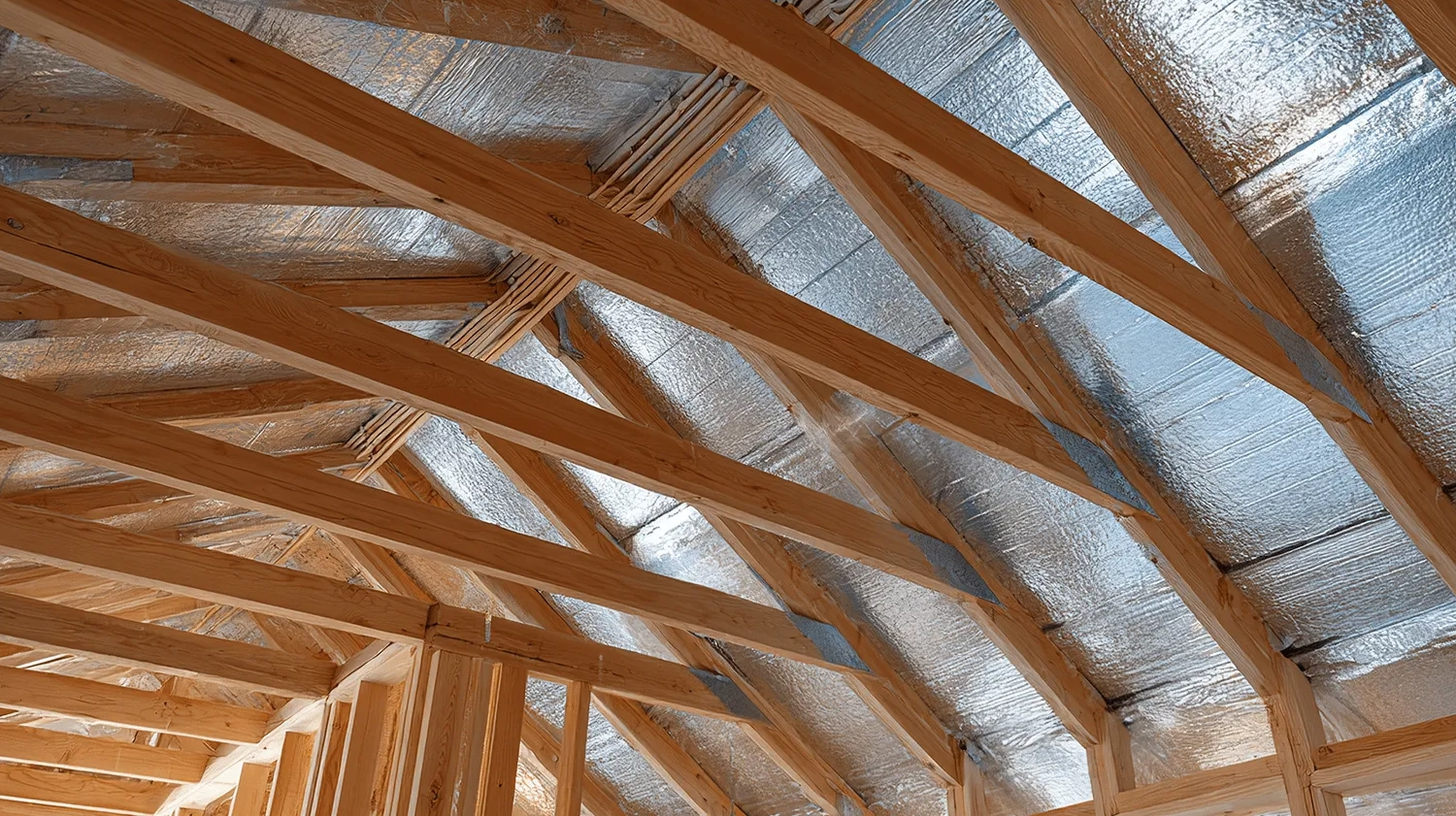
San Antonio homeowners face a persistent challenge: intense sunlight heats the roof, raises attic temperatures, and makes the air-conditioning system work harder. Radiant barrier products can help manage that heat, but not all options provide the same level of protection.
TechShield can reduce radiant heat, but it may not be enough on its own. For homeowners who want more complete protection, a dedicated radiant barrier is often the better choice.
Quick Answer
TechShield is a type of radiant barrier sheathing made from oriented strand board (OSB) roof decking with aluminum foil laminated to one side. It is usually installed during new construction or when a project requires a new roof deck.
A traditional radiant barrier is a separate reflective foil material installed inside an existing attic, often along the underside of the roof rafters. It can usually be added without removing functional shingles or roof decking.
TechShield can help reduce radiant heat, but a professionally installed radiant barrier generally provides a more practical and complete option for homeowners who want to improve an existing attic without replacing the roof structure.
Key Takeaways
- TechShield combines radiant barrier foil with structural roof sheathing.
- TechShield can reduce radiant heat, but it may not provide enough protection on its own.
- Traditional radiant barriers are separate products commonly used to retrofit existing attics.
- A dedicated radiant barrier is often the better option for homeowners seeking more complete radiant heat protection.
- Both systems need a reflective surface facing an open-air space.
- A radiant barrier does not replace traditional attic insulation.
- Installation quality, ventilation, insulation, ductwork, and attic conditions affect performance.
What Is TechShield Radiant Barrier Sheathing?
TechShield is a radiant barrier OSB product that serves two purposes. It provides structural roof sheathing while also helping reduce radiant heat gain inside the attic.
The product consists of engineered wood decking with aluminum foil laminated to one side. During installation, the wood surface faces the roof covering, while the foil facing points down toward the attic. This orientation allows the reflective surface to face an open attic space.
TechShield installs in much the same way as conventional OSB roof sheathing. Builders can incorporate it into a new home without adding a separate radiant barrier installation step. It may also be used when an existing roofing project requires all the decking to be replaced.
This type of radiant barrier decking is generally not practical as a stand-alone upgrade for a roof that remains in good condition. Adding it to an existing house would typically require removing the shingles and current roof decking material. That can introduce substantial cost, additional labor, and unnecessary construction work when the existing structure does not need replacement.
What Is a Traditional Radiant Barrier?
A traditional radiant barrier is a separate reflective material installed within the home’s attic. The material commonly includes a thin aluminum surface designed to reflect radiant heat rather than absorb and emit it toward the living space.
Installers may attach radiant barrier foil beneath the roof rafters or use another configuration appropriate for the attic. Regardless of the method, the reflective surface must face an open-air space. Placing foil tightly between two solid layers prevents it from working as intended.
Traditional radiant barrier products are often a practical choice for existing homes because they can be installed without replacing the roof deck or new shingles. However, installation is labor-intensive and requires precision. The material must be positioned around framing, wiring, vents, and other attic components without creating gaps or obstructing airflow.
A trained installer can also evaluate how the barrier will interact with the attic’s insulation, ventilation, and ductwork. These elements function as a complete system, so changing one component without considering the others can limit the benefit.
TechShield vs. Radiant Barrier: Key Differences
Although both products are designed to reduce radiant heat, they are not interchangeable in every construction project.
One of the most important distinctions involves timing. TechShield is incorporated into the structure during roof deck construction or replacement. Traditional radiant barrier foil can be added later, making it a more flexible option for homeowners whose roofing materials remain serviceable.
Neither product provides the same function as conventional insulation. Radiant barriers primarily address radiant heat. Attic insulation slows conductive heat transfer, while air sealing helps prevent conditioned air from escaping. A well-performing attic may need all three strategies.
How Can a Radiant Barrier Help a San Antonio Home?
Radiant barriers tend to provide the greatest benefit in hot, sunny climates. That makes San Antonio a suitable location for considering this type of home improvement.
When sunlight strikes the roof, the roofing materials become hot. That heat moves through the shingles and roof deck. The underside of the deck then emits radiant heat toward the attic floor, insulation, air ducts, and other surfaces.
A radiant barrier interrupts part of this process by reflecting radiant energy. This can help reduce attic temperatures, limit the heat affecting attic ductwork, and make it easier for the cooling system to maintain a comfortable indoor temperature.
Certain radiant barrier products claim to block up to 97 percent of radiant heat under specified testing conditions. Attic temperature reductions of up to 30°F may also be possible under favorable conditions. Reported energy savings can range from approximately 3 to 6 percent annually, with some estimates reaching up to $150 per year.
These figures are not guaranteed results for every house. Actual savings depend on several factors, including:
- Roof orientation and sun exposure
- Existing insulation levels
- Air leakage
- Attic ventilation
- HVAC efficiency
- The location and condition of ductwork
- Installation quality
- Household energy use
Radiant barriers may also support lower HERS Index scores and help a project meet certain energy codes or green building standards. However, installing a radiant barrier does not automatically provide ENERGY STAR certification or qualify a home for specific green building credits.
Installation Details That Affect Performance
The quality of the installation has a major effect on radiant barrier performance. Simply placing aluminum foil in an attic is not enough.
The reflective surface must face an open air space. It should also provide consistent coverage without improper compression, large gaps, or an incorrect orientation. Installers must work carefully around roof rafters, electrical components, chimneys, vents, and other features.
Proper attic ventilation is equally important. The barrier should not block soffit, ridge, or other approved vents. Restricting ventilation can interfere with the attic’s ability to manage heat and moisture.
The attic’s existing insulation should also be evaluated. A radiant barrier does not provide a conventional R-value or replace insulation on the attic floor. If insulation is damaged, uneven, or insufficient, correcting those issues may be necessary to improve the home’s overall efficiency.
Air leaks between the living space and attic present another challenge. Radiant barriers reflect heat, but they do not stop cooled air from escaping through gaps around fixtures, penetrations, and framing.
Dust accumulation can also reduce the efficiency of an exposed reflective surface. This is one reason the foil is commonly positioned to face downward rather than lying flat with the reflective side exposed upward.
For a closer look at proper placement, read How to Install Radiant Barrier in Your Attic the Right Way.
Which Option Makes Sense for Your Home?
TechShield may be worth considering when:
- You are building a new home.
- Your project already requires new roof sheathing.
- Damaged decking must be replaced.
- You can incorporate radiant barrier decking before installing new shingles.
A traditional radiant barrier retrofit may be the better fit when:
- Your existing roof and decking are still functional.
- You want to improve attic heat protection without removing the roof.
- Your attic has limited or incomplete radiant barrier coverage.
- You need an installation designed around existing insulation, ventilation, and ductwork.
Homeowners should base their decision on an evaluation of the entire attic rather than on a single advertised temperature reduction or savings estimate. If your home already contains older radiant barrier sheathing, learn how to evaluate its condition in Does Radiant Barrier Wear Out?.
Schedule an Attic Assessment
Not sure whether your home has TechShield or whether its existing barrier provides enough coverage? Green Energy of San Antonio can inspect your attic, insulation, ventilation, ductwork, and radiant barrier system.
Call (210) 310-3371 to schedule a free consultation or contact us to discuss the right option for your San Antonio home.
Frequently Asked Questions
Is TechShield the same as a radiant barrier?
TechShield is one type of radiant barrier. It combines structural OSB roof sheathing with a reflective foil facing. A traditional radiant barrier is a separate material installed inside an attic and does not function as roof decking.
Can a radiant barrier be installed if my home already has TechShield?
It may be possible, but an additional barrier is not automatically necessary. The potential benefit depends on the TechShield’s condition, orientation, coverage, attic structure, insulation, ventilation, and ductwork. An attic assessment can determine whether there are meaningful gaps in the current system.
Does a radiant barrier replace attic insulation?
No. A radiant barrier reflects radiant energy, while conventional insulation slows conductive heat transfer. These materials perform different functions and can work together as part of an efficient attic system.
Does radiant barrier foil need an air gap?
Yes. A reflective surface must face an open air space to work effectively. Sandwiching the foil tightly between solid materials eliminates the air space needed for radiant heat control.
Is TechShield practical for an existing home?
TechShield is generally practical when the roof decking already needs replacement. Installing it solely as an energy upgrade would typically require removing the current shingles and decking, making a traditional attic retrofit more practical in many existing homes.
Can a radiant barrier reduce attic temperatures?
Yes. A properly installed barrier can reduce the radiant heat entering an attic. Reductions of up to 30°F may occur under favorable conditions, but the actual result depends on the weather, roof exposure, ventilation, insulation, attic design, and installation quality.
How long does a radiant barrier remain effective?
A quality radiant barrier can remain effective for many years because its reflective properties do not depend on mechanical components. Damage, dust, improper placement, remodeling, or changes in the attic can reduce its performance over time.


